Prim's Algorithm Time Complexity Adjacency List
Prim's Algorithm Time Complexity Adjacency List. Implementation of prim's algorithm for finding minimum spanning tree using adjacency matrix with time complexity o(|v|2), prim's algorithm is a greedy algorithm. Create a priority queue q to hold pairs of ( cost, node ).
# prim's algorithm in python inf = 9999999 # number of vertices in graph v = 5 # create a 2d array of size 5x5 # for adjacency matrix to represent graph g = [[0, 9, 75, 0, 0], [9, 0, 95, 19, 42], [75, 95, 0, 51, 66], [0, 19, 51, 0, 31], [0, 42, 66, 31, 0]] # create a array to track selected vertex # selected will become true otherwise false selected = [0, 0, 0, 0, 0] # set number of edge to 0. Create a priority queue q to hold pairs of ( cost, node ). Therefore, the time complexity checking the presence of an edge in the adjacency list is.
O(E + Vlogv) Using Fibonacci Heap
Here, using an adjacency list would be inefficient. Now, let's see the implementation of prim's algorithm. So tc for one vertex will be o (n)+o (n)=o (n).
Prims Minimum Spanning Tree ( Graph G, Souce_Node S ) 1.
Here, e is the number of edges and v is the number of vertices/nodes. # prim's algorithm in python inf = 9999999 # number of vertices in graph v = 5 # create a 2d array of size 5x5 # for adjacency matrix to represent graph g = [[0, 9, 75, 0, 0], [9, 0, 95, 19, 42], [75, 95, 0, 51, 66], [0, 19, 51, 0, 31], [0, 42, 66, 31, 0]] # create a array to track selected vertex # selected will become true otherwise false selected = [0, 0, 0, 0, 0] # set number of edge to 0. It can be improved further by using the implementation of heap to find the minimum weight edges in the inner loop of the algorithm.
Decrease Key Will Be Called For At Most Once For Each Edge.
Min heap operations like extracting minimum element and decreasing key value takes o (logv) time. Implementation of prim's algorithm for finding minimum spanning tree using adjacency matrix with time complexity o(|v|2), prim's algorithm is a greedy algorithm. We have discussed prim’s algorithm and its implementation for adjacency matrix representation of graphs.
If Adjacency List Is Used To Represent The Graph, Then Using Breadth First Search, All The Vertices Can Be Traversed In O (V + E) Time.
Thus all the edges we pick in prim's algorithm have the same weights as the edges of any minimum spanning tree, which means that prim's algorithm really generates a minimum spanning tree. All the vertices are included in the mst to complete the spanning tree with the prims algorithm. In this post, o (elogv) algorithm for adjacency list representation is discussed.
Since Prim's Algorithm Is Used In Denser Graphs, E Can Approach V^2, But When It Does, The Time.
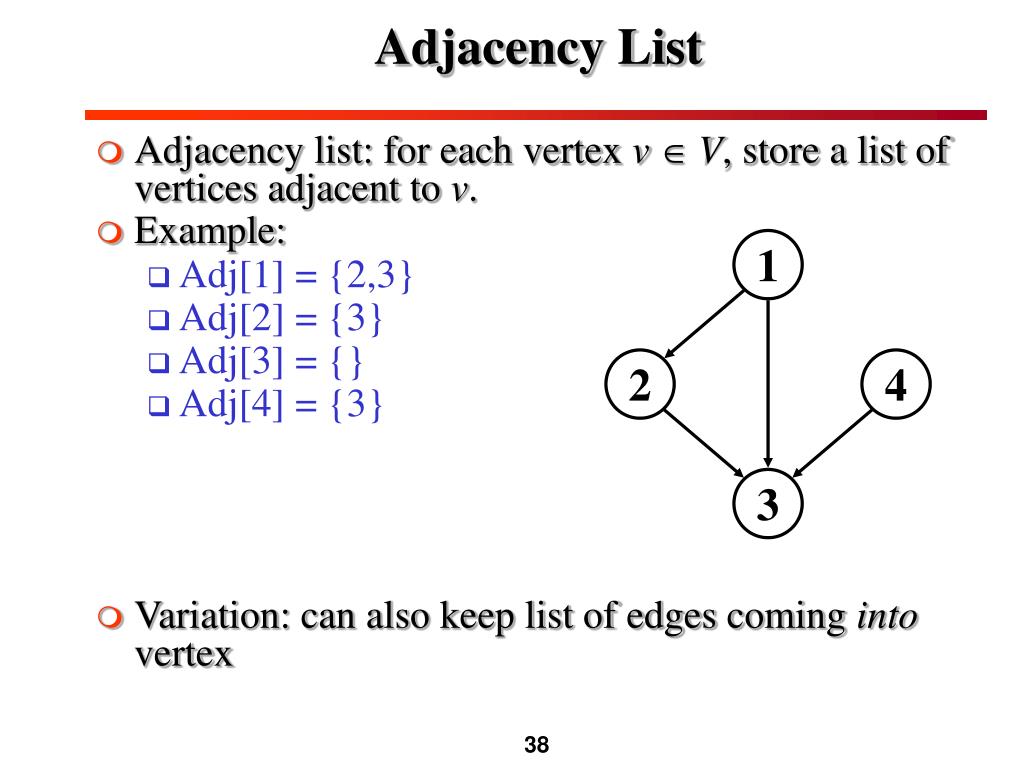
As discussed in the previous post, in prim’s algorithm, two sets are maintained, one set contains list of vertices already included in mst, other set contains vertices not yet included. Time complexity adjacency list representation is o (e log v). Thus, the complexity of prim's algorithm for a graph having n vertices = o (n 2).


Komentar
Posting Komentar